A 100 Year Disservice and Why We Need Queer Actors
The Celluloid Closet, though released in 1996, still remains one of the most poignant movies I’ve watched to date. The disservice that Hollywood has done to the LGBTQAI community quite honestly breaks my heart. In addition to this devastating though enlightening history, there are many interesting points of view touched upon in the film, brought up by the actors and artists who were interviewed. There is a mix of queer actors and straight actors who played significant gay roles. This highlighted an important and interesting discrepancy for me. When straight actors, like Tom Hanks and Susan Sarandon, talked about playing queer roles and the choices they made because it, they emphasize the universalism of their characters or acting choices, not the queerness of their characters and acting choices. For example, Sarandon describes how the kiss at the end of Themla and Louise is a display of intimate affection thats goes beyond sexuality. Tom Hanks argues a similar thing about the entire plot of Philadelphia.
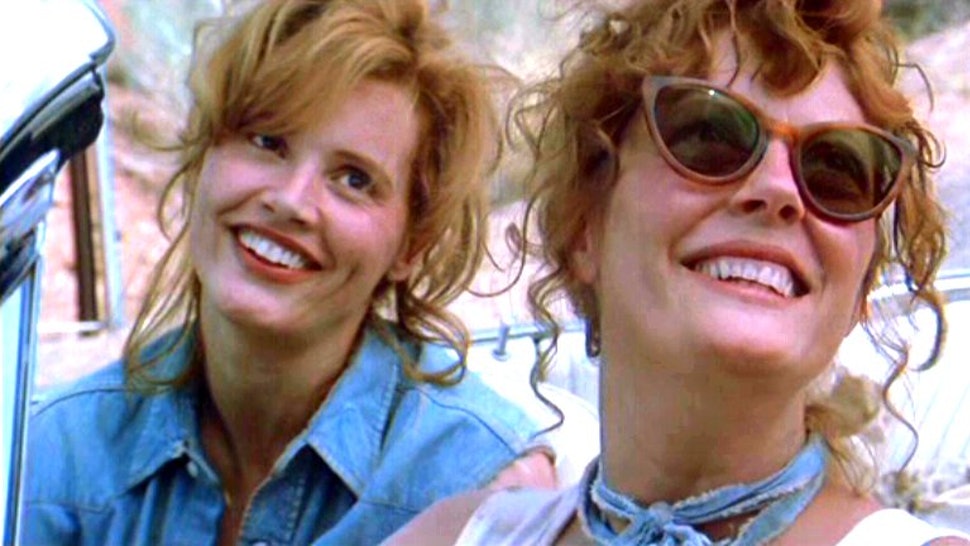
Most likely unbeknownst to them, I take this view point to be extremely minimizing. Thelma and Louise are recognized as dyke icons. The movie has a special place in the heart of queers all around the world. To minimize a relationship that clearly read as lesbian to something “beyond queerness”, is an offense to the queer population. Here is a movie that means so much to us. It is one of the few representations we have in pop culture, especially when it originally came out. To detach it from being a queer movie and name is as “universal” is just another form of erasure. Now, I don’t blame Sarandon and Hanks. As straight people, they do not understand or personally feel the pain of queer erasure from pop culture. THIS is why it is important to hire queer and gender non-conforming actors to play queer and gender non-conforming roles in cinema. We have not only an intrinsic connection to the role, but also a greater context and understanding of the effect the role will have on the queer community. Overall, I thoroughly enjoyed The Celluloid Closet and believe it is an important movie for any queer person to watch in order to better understand our history.
 Sarah Klotz
Hi Sarah,
While I do agree that straight actors commenting on their LGBTQ+ roles as solely “beyond queerness” and “universal” and not about their queerness is problematic, I’m not sure if queer films or characters being universal is a problem. I believe that queer films and characters can be universal in their own ways, but their queerness should definitely be emphasized more. I think that by taking away the ability of queer films to be universal could potentially make them fall deeper into a non-normalized category in society, when queer characters and film should be normalized. This may just be me, but if a queer film or character is somewhat universal, it allows society to see that LGTBQ+ persons are actual people too, with just as much feelings as them, and maybe even share some of those feelings (that is not to say that straight people share similar experiences). LGTBQ+ are not the “other.” However, not every queer film has to adhere to universality; they can be set only for a queer stage, and that is just as good as well. I think what I’m trying to say here is that there can be both kinds of queer films: those with a queer stage, and those with a slightly more universal one.
LikeLike
Hi Sarah,
While I do agree that straight actors commenting on their LGBTQ+ roles as solely “beyond queerness” and “universal” and not about their queerness is problematic, I’m not sure if queer films or characters being universal is a problem. I believe that queer films and characters can be universal in their own ways, but their queerness should definitely be emphasized more. I think that by taking away the ability of queer films to be universal could potentially make them fall deeper into a non-normalized category in society, when queer characters and film should be normalized. This may just be me, but if a queer film or character is somewhat universal, it allows society to see that LGTBQ+ persons are actual people too, with just as much feelings as them, and maybe even share some of those feelings (that is not to say that straight people share similar experiences). LGTBQ+ are not the “other.” However, not every queer film has to adhere to universality; they can be set only for a queer stage, and that is just as good as well. I think what I’m trying to say here is that there can be both kinds of queer films: those with a queer stage, and those with a slightly more universal one.
LikeLike
Preach.
It can be so frustrating to hear arguments about queer representation and how it should be shown from straight perspectives. It’s not that straight creatives don’t have perspectives that matter, it’s just that often times they simply don’t understand what’s lacking the way people within the community itself do. Very few cis actors are going to have a nuanced enough perspective to play a trans role, which is why trans roles are almost always leaps and bounds better when played by trans actors. There’s so many arguments about whether or not straight actors should be allowed to play queer parts, and there’s a lot of strong opinions from every side. I tend to lean towards thinking that, for the time being, trans and nonbinary people should play trans and nonbinary roles. Sexuality, I think, can be more fluid in its casting. I think there should be a focal shift towards hiring more queer actors in general, however, because there’s plenty of good ones out there. There’s no reason why Scarlett Jo ciswoman son should be getting cast in a trans story when there are plenty, plenty more capable trans actors if you’re just willing to put the casting call out and actually look for them. The next step for film needs to be a major push towards getting queer and trans actors on the scene in larger droves. ASAP!!!
Loved your response!
~ Maddie
LikeLike
I really agree with you here! I remember first reading about the media circus and all the critical reactions to “Brokeback Mountain” when it first was released in theaters, and there were interviews with both of the lead actors at the time and they both made similar claims revolving around characterizing their character’s very evident sexual and romantic relationship in the film as “beyond queer” or “universal”. I agree with you that this kind of rhetoric leads to erasure but I do not thing we can exactly blame them. Simply, it was the safe answer to give when considering the subject matter. Queer people deserve placement in popular discourse and deserve to tell their own stories!
LikeLike